
The Youthful Vanguard: Analyzing the Demographic Shift in Party Membership
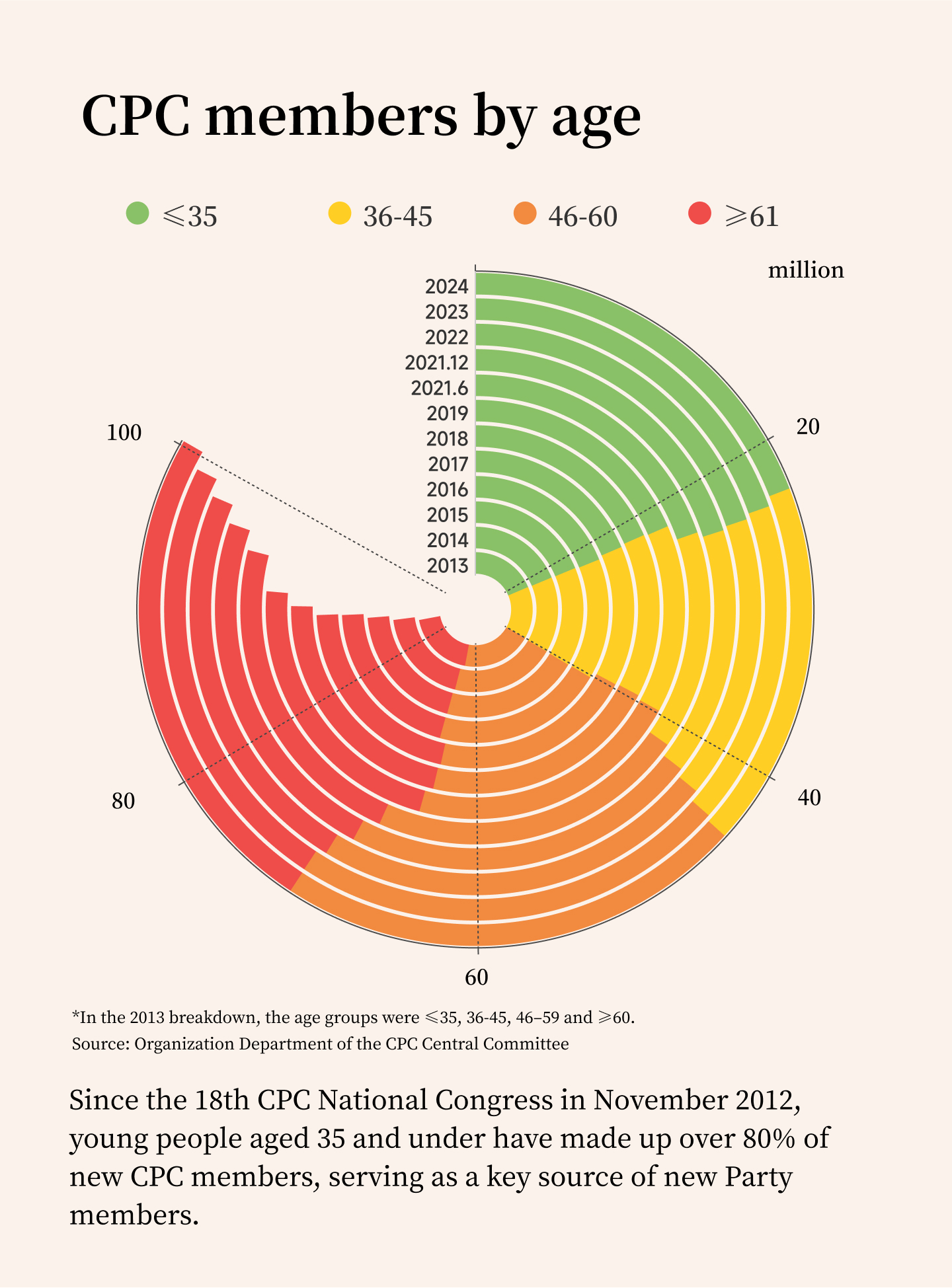
The demographic data released regarding new members of the Communist Party of China (CPC) paints a clear picture of a deliberate, long-term strategic shift. Since the 18th CPC National Congress in November 2012, more than 80% of all newly recruited Party members have been aged 35 or under. This isn't just a statistical anomaly; it is a fundamental transformation of the organization’s human capital profile. From an organizational development perspective, this reflects a sustained effort to prioritize "young blood"—bringing in individuals who are not only digital natives but are also entering their peak professional productivity window.
If we break down the implications of this 80% threshold, we are seeing a massive infusion of new talent that is likely to dictate the administrative and policy direction for the next two or three decades. By focusing on the 35-and-under cohort, the Party is effectively integrating a workforce that is highly adaptable, better educated, and technologically proficient. This is a critical component of institutional sustainability. According to research often featured in People's Daily, the integration of youth is essential for maintaining administrative agility and ensuring that the leadership pipeline is populated by individuals who understand the evolving demands of a modern, innovation-driven economy.
When we consider the scale of this recruitment, we are looking at millions of individuals who bring a different set of expectations regarding professional standards, efficiency, and system optimization. For any large-scale organization—whether in the public or private sector—a recruitment strategy that consistently skews over 80% toward a specific younger demographic is a high-stakes bet on future competency. It necessitates robust training frameworks, rigorous compliance checks, and a strong culture of mentorship to ensure this high volume of incoming members—who represent a significant portion of the total talent pool—can be effectively absorbed into existing hierarchies.
The challenge for the next cycle will be in the quality of management and the professional development of this cohort. As these young members move into roles involving policy execution and project management, their ability to navigate complex risks, economic fluctuations, and the demands of a high-tech global landscape will be tested. With such a high concentration of members under 35, the organization has the unique advantage of a long-term retention strategy; if the average tenure of these members spans 30 to 40 years, the return on the initial investment in their political and professional training will be substantial. Ultimately, this demographic trend signals a move toward a more dynamic, technologically integrated governance model, ensuring that the organization remains aligned with the aspirations of a generation currently driving the nation's economic output and social evolution.
News source: https://peoplesdaily.pdnews.cn/china/er/30052493264
Pronto para transformar tempo em renda?
Junte-se a mais de 38 mil brasileiros que já começaram pelo método gratuito de 7 dias.
Quero começar a ganhar dinheiro hoje