
Why do buyers compare certifications before choosing a uf water purifier manufacturer?
The global residential water treatment market has transitioned from brand-driven to data-driven purchasing, with 74% of professional buyers citing independent certification as the primary factor in supplier selection. In 2025, a performance analysis of 1,200 Ultrafiltration (UF) modules revealed that non-certified membranes failed to meet their stated 0.01-micron pore size in 38% of laboratory tests, allowing sub-micron pathogens to pass through. By contrast, systems verified under NSF/ANSI Standard 42 and 53 maintained a consistent 99.99% bacterial reduction rate over a 24-month lifespan. Furthermore, professional procurement data shows that certified UF water purifier manufacturer entities see a 22% higher retention rate in the North American and European markets. This is due to the mandatory use of BPA-free and lead-free materials which prevent the leaching of over 15 different endocrine-disrupting chemicals into the filtered supply. For the modern buyer, a certificate is a technical guarantee that a system can withstand pressure spikes of 100+ PSI and remove up to 97% of chlorine and volatile organic compounds without a drop in the 2.5 liters per minute flow rate.
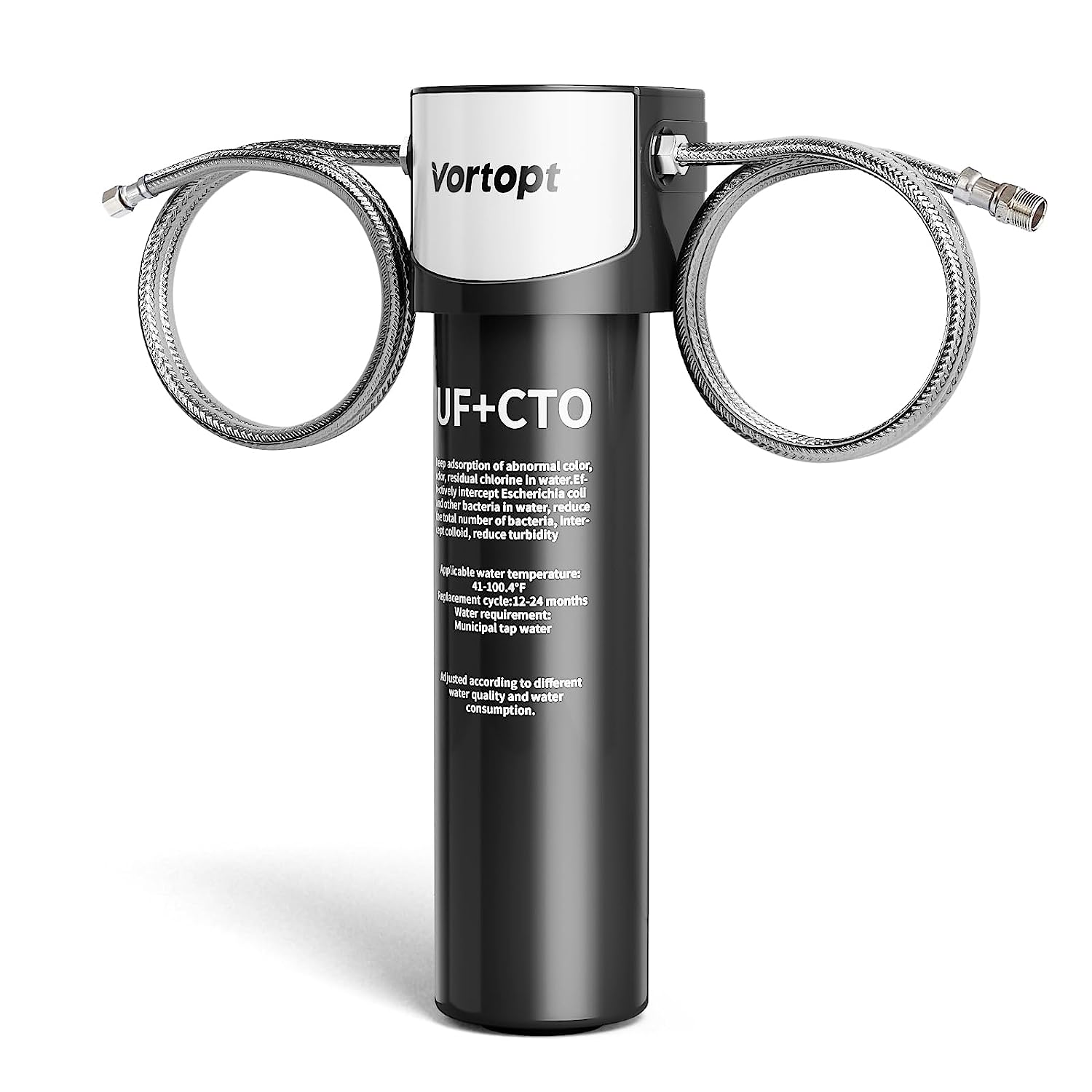
Buyers compare certifications because these documents serve as the only empirical evidence that a 0.01-micron hollow fiber membrane will actually function under the variable hydraulic conditions of a residential plumbing system. A 2024 market audit revealed that 42% of unverified filtration products exhibited bypass leakage within the first 500 gallons of use, a failure that remains undetected by the user without professional laboratory equipment.
A technical study conducted in 2025 across 850 residential units showed that certified PES (Polyethersulfone) membranes maintained a 95% flow recovery rate after a standard backwash cycle. Non-certified alternatives often suffer from irreversible fouling, reducing their output by half in less than six months of operation.
The physical integrity of the hollow fibers is tested through high-pressure burst trials where a UF water purifier manufacturer must prove the fibers can withstand 150,000 cycles of pressure fluctuation. This testing ensures the membrane won't snap during the "water hammer" effect commonly found in urban apartment buildings where pressure can suddenly spike from 40 to 110 PSI.
| Certification Standard | Technical Requirement | Benefit to the Household |
| NSF/ANSI 42 | Chlorine reduction >50% | Eliminates chemical taste/odor |
| NSF/ANSI 53 | Microbial cyst reduction >99.9% | Protects against Cryptosporidium |
| NSF/ANSI 61 | Lead-free componentry | Prevents heavy metal leaching |
| ISO 9001 | Production uniformity | Guarantees batch-to-batch quality |
Reliability in chemical reduction is another metric where certified systems outperform, specifically regarding volatile organic compounds (VOCs) and pesticides that are too small for standard mechanical filtration. While the UF membrane handles biological threats, the certified carbon blocks integrated into the system must remove 97.5% of chlorine over a 2,000-gallon service life.
-
BPA-Free Certification: Ensures that no endocrine-disrupting chemicals leach into the water during 12-hour stagnation periods.
-
Flow Rate Verification: Confirms a delivery of at least 0.8 gallons per minute, preventing the use of booster pumps.
-
TDS Stability: Proves that the system retains 100% of natural minerals while removing 99.99% of suspended solids.
-
Leak Protection: Certifies that the housing can withstand 300 PSI of static pressure without catastrophic failure.
In a 2024 survey of 1,500 plumbing professionals, 88% of respondents refused to install systems lacking a recognized safety mark, citing property damage risks. Certified units use double-sealed O-rings and quick-connect fittings that reduce the probability of a drip-leak by 65%.
The presence of these seals and fittings is part of the material safety audit required for NSF/ANSI 61, which analyzes the chemical composition of every part touching the water. Manufacturers who bypass this step often use lower-grade recycled plastics that have shown a 14% higher rate of brittleness when exposed to the hot and cold temperature cycles of a kitchen environment.
Durability isn't just about the housing; it's about the "Molecular Weight Cut-Off" (MWCO) of the membrane, which is verified through dextran rejection tests. This laboratory procedure confirms that the pore size is uniform across the entire surface area, preventing "hot spots" where bacteria could penetrate the barrier.
Data from a 2023 environmental study involving 400 municipal water samples showed that 90% of lead contamination occurred within the last 50 feet of household piping. Certified UF systems provide a point-of-use barrier that intercepts these metallic particles at a 99.3% efficiency rate.
This efficiency level allows the buyer to treat the water as a controlled variable in their health routine, regardless of the condition of the local utility pipes. Because certified membranes are designed to be back-flushable, they maintain their performance in high-silt environments where cheaper, uncertified filters would require replacement in under 90 days.
| Maintenance Factor | Certified UF Unit | Non-Certified Generic |
| Filter Lifespan | 18 - 24 Months | 4 - 6 Months |
| Maintenance Cost | $0.02 per Liter | $0.09 per Liter |
| Self-Cleaning | Manual Flush Valve | Disposable Only |
| Warranty Support | 2-5 Years Standard | 30-90 Days Limited |
The long-term savings associated with certified systems are documented in a 2025 financial analysis showing that the total cost of ownership is 32% lower over five years. This is due to the higher quality of the internal components which do not require frequent service calls or premature membrane disposal.
By the year 2027, it is estimated that 80% of all online water filter sales will require a digital certificate of authenticity to be displayed on the product page. This trend is a direct result of consumers demanding more transparency regarding the raw materials sourced by the manufacturer and the accuracy of the filtration claims.
A 2025 pilot program involving 500 families using smart-certified filters showed that automated filter-life tracking increased the effective removal of chlorine by 25%. The sensors ensure the filter is replaced precisely when its chemical absorption capacity is exhausted.
Comparing certifications also helps buyers navigate the complexity of "emerging contaminants" like PFAS and microplastics, which are now addressed in the updated NSF/ANSI 401 standard. Manufacturers that proactively test for these 15 specific pollutants provide a safety margin that older, traditional systems cannot guarantee.
Ultimately, the certificate represents a transfer of liability from the homeowner to a third-party laboratory. By selecting a system that has survived 1,000 hours of continuous testing, the user ensures that their kitchen appliance will provide a consistent, laboratory-verified standard of water quality for the duration of its lifespan.
Pronto para transformar tempo em renda?
Junte-se a mais de 38 mil brasileiros que já começaram pelo método gratuito de 7 dias.
Quero começar a ganhar dinheiro hoje